
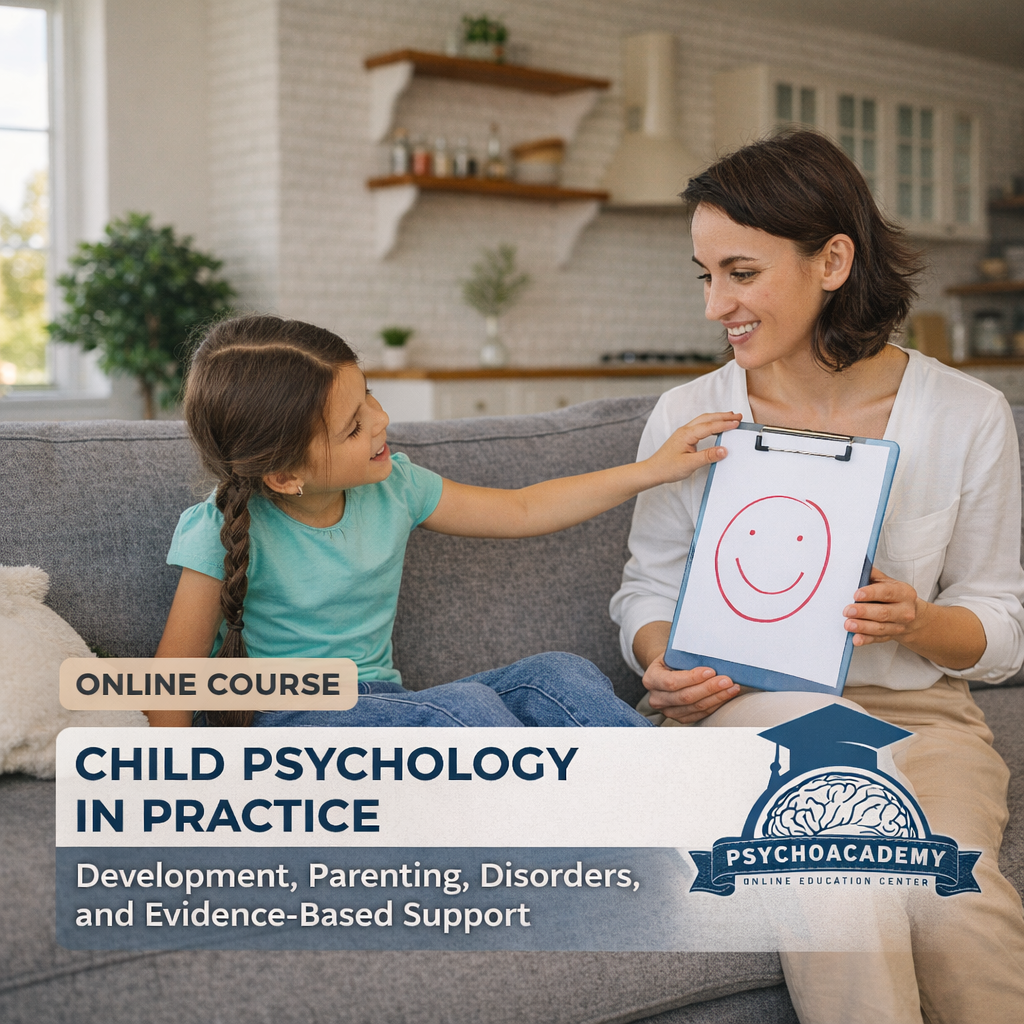
Understand Children More Deeply. Support Development More Effectively.
This course integrates modern developmental psychology, neuroscience, parenting research, and child mental health science to provide clear, practical, and academically grounded knowledge that can be applied in both professional and personal settings.
Participants gain access to structured learning materials, practical support frameworks, and tools that help translate psychological theory into real-world child support strategies.
The course is delivered in a flexible digital format, allowing you to learn at your own pace from anywhere.
Learning Format
The course is available in three accessible learning formats to support different learning styles and schedules:
✅ Video lessons – professionally structured presentations designed for visual learning
✅ Audio format – learn while commuting, exercising, or during daily activities
✅ Written learning materials – detailed, structured transcripts and educational content
This multi-format design allows participants to engage with the material in a way that best supports their learning preferences.
Who Is This Course For?
This course is designed for individuals who want to better understand child development and mental health through a scientifically informed and responsible educational framework.
The program is especially valuable for:
➡ Parents and caregivers who want to better understand children’s emotions, behavior, and developmental needs
➡ Teachers, educators, and school staff supporting children’s social and emotional development
➡ Mental health professionals and support workers seeking educational expansion in child psychology
➡ Students in psychology, education, social sciences, and helping professions
➡ Individuals interested in developmental psychology and evidence-based parenting approaches
No prior professional training is required.
What You Will Learn
Participants will develop knowledge and understanding of:
✔ Developmental milestones in emotional, social, cognitive, and behavioral development
✔ Neurobiological foundations of child development and brain plasticity
✔ Attachment, parenting styles, and family emotional environments
✔ Evidence-based parenting strategies and positive discipline approaches
✔ Emotional regulation skill development and behavioral competence in children
✔ The role of play in social, cognitive, and emotional development
✔ Evidence-informed strategies for managing behavioral challenges
✔ Recognition and understanding of common childhood mental health conditions including ADHD, autism spectrum presentations, anxiety, depression, and trauma-related difficulties
✔ Collaborative support models involving families, schools, and mental health professionals
✔ Prevention strategies, resilience-building, and long-term child wellbeing support
Course Content Overview
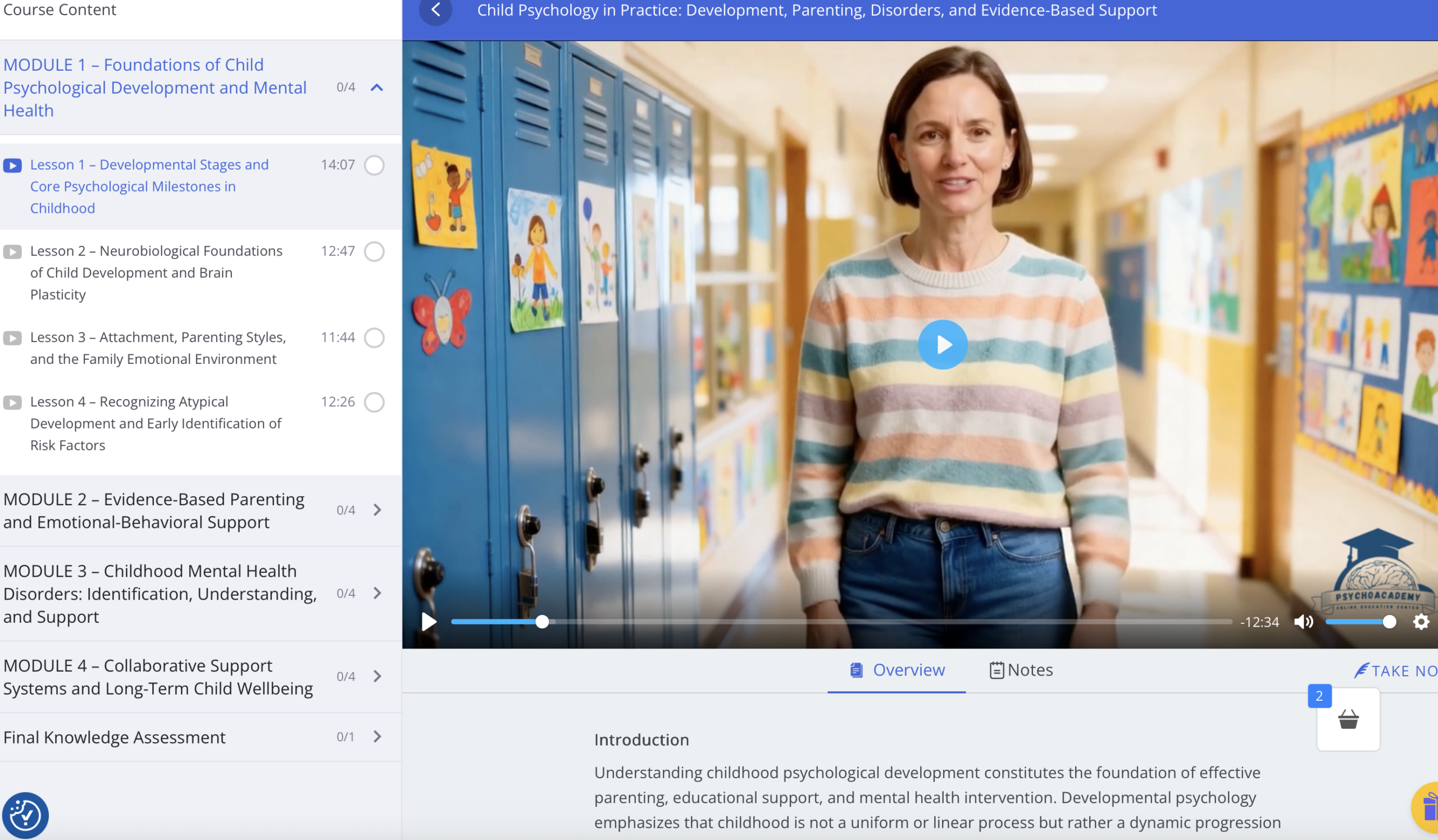
MODULE 1 – Foundations of Child Development and Mental Health
• Developmental stages and psychological milestones
• Neurobiological foundations and brain plasticity
• Attachment, parenting styles, and family environment
• Recognizing atypical development and early risk factors
MODULE 2 – Evidence-Based Parenting and Emotional-Behavioral Support
• Positive discipline and self-regulation development
• Supporting emotional regulation and behavioral competence
• The role of play in development
• Managing behavioral challenges using evidence-based strategies
MODULE 3 – Childhood Mental Health Disorders: Identification and Support
• Neurodevelopmental disorders including ADHD and autism spectrum conditions
• Emotional disorders including anxiety and depression
• Trauma, attachment disruption, and early adversity
• Differential recognition and integrative support approaches
MODULE 4 – Collaborative Support Systems and Long-Term Child Wellbeing
• The role of schools and educators in mental health support
• Supporting peer relationships and school adjustment
• Collaborative care between families, educators, and professionals
• Promoting resilience, prevention strategies, and long-term emotional wellbeing
Bonus Educational Materials Included
Participants receive downloadable support materials designed to reinforce learning and provide practical application tools.
These include:
✅ Behavioral and developmental observation checklists
✅ Emotional regulation exercises and activity guides
✅ Developmental milestone reference tables
✅ Structured parenting and support planning templates
✅ Therapeutic play and emotional support activity ideas
✅ Child emotional support worksheets and reflection tools
Certificate of Completion
After completing the course and passing the final knowledge assessment, participants receive a personalized Certificate of Completion confirming participation and learning scope.
The certificate documents educational participation and professional development.
Why Choose This Course?
⭐ Evidence-informed and academically structured content
⭐ Combines scientific theory with practical support strategies
⭐ Suitable for both professional learning and personal development
⭐ Flexible self-paced learning format
⭐ Covers developmental psychology, parenting, mental health, and prevention in one structured program
⭐ Designed according to contemporary international child mental health research standards
Educational Disclaimer
This course is intended for educational and informational purposes only. The content does not constitute therapy, psychological diagnosis, medical advice, or clinical training. Participation in this course does not provide professional licensure, certification, or authorization to diagnose or treat mental health conditions. Individuals experiencing developmental, emotional, or mental health concerns related to a child should seek evaluation from a licensed healthcare or mental health professional. Participants working with children must operate within the legal and professional scope of their credentials and applicable regulatory guidelines.
See what this course looks like from the inside:
Reviews
There are no reviews yet.